

GOVERNOR'S APARTMENT
Originally, a residence located on the second floor was intended for the governor and his family, and for their servants. The second floor was reached by a private staircase in the eastern wing of the building. Governors were selected from among Hungarian notables for a fixed term of office and, as a rule, they brought and then took away their own belongings.
During the major reconstruction of the Palace in 1938 under Italian rule, substantial changes were made to the second floor. Rooms in the eastern part of the second floor were turned into guest rooms, while the north part housed a kitchen and auxiliary household rooms. A dining room was set up in the western part for the governor’s family, as were a lounge and smoking salon, while the master bedroom and children’s rooms, wardrobes, private salons and bathrooms were set up in the southern part. There was an elevator in the west wing leading to one of the governor’s private salons, connecting the rooms with his first floor office.
The redesign of the Palace’s second floor was the most demanding part of the reconstruction in light of the need to reorganize the space to accommodate the existing window openings as they were originally designed to comply with the appearance of the façade. Hence, the corridors and certain rooms were left without daylight.
After World War II, the Palace assumed a cultural functino, and as of 1947 it was managed by the Central Culture Hall. The Fine Arts Gallery was established on the Palace’s second floor, today the Modern and Contemporary Art Museum, opened to the public on 2 May 1949. The studies of the curators and the director were set up with minor changes in the former bathrooms and wardrobes, while the rooms and salons were turned into exhibition spaces.
There was a passage through the east wing of the second floor toward the attic where art studios were accommodated until the end of the 1970s. The Gallery organized numerous exhibitions, the most prominent being Salon ’54, the first collective Yugoslav event exhibiting abstract art.

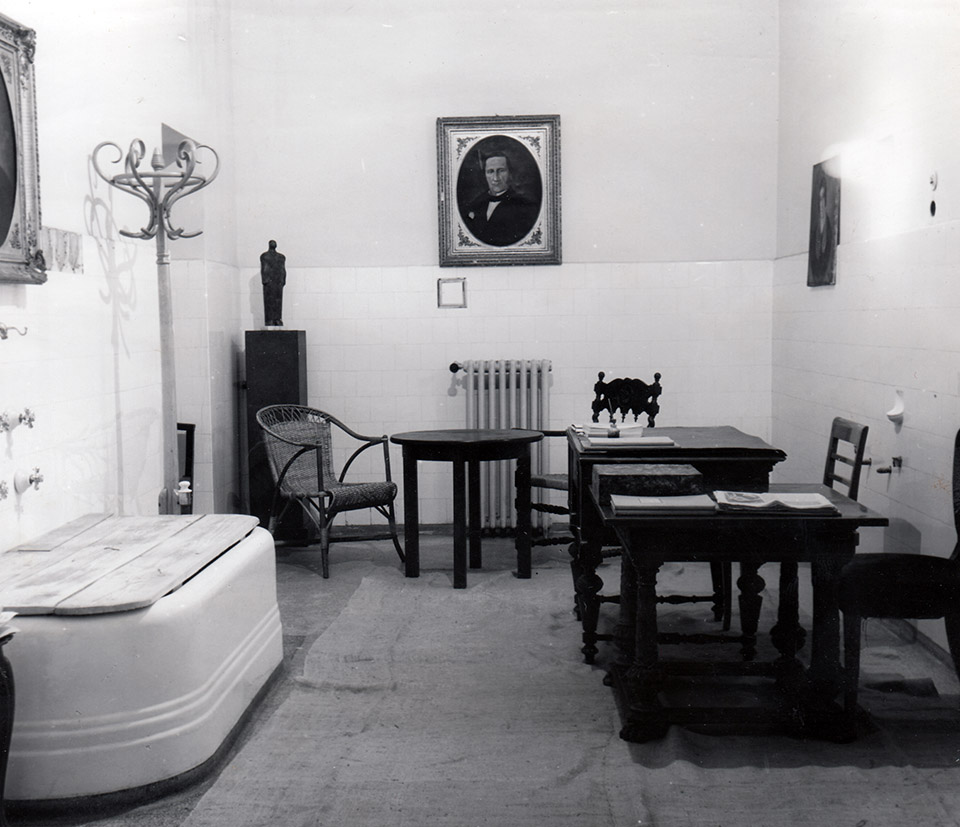
The Fine Arts Gallery was relocated in 1956 to its present location while the space was used by the National Museum, which opened its exhibition Rijeka Seafaring in the 19th century there, and in 1964 this became the Museum’s permanent maritime display. Following the renovation of the exhibition space, the former bathrooms became offices for the curators.

In 1978 the permanent display of the Collection of Locks, Keys and Hinges, was installed, but it was removed in 1991, on the eve of the Homeland War, as per instructions from the Ministry of Culture.
Following poorly rendered roof repairs in 1992, this part of the Palace sustained the worst damage from leaks and was not used until 2010, when the Department of Naval History opened the Sails of Kvarner permanent display in the western part of the Palace.
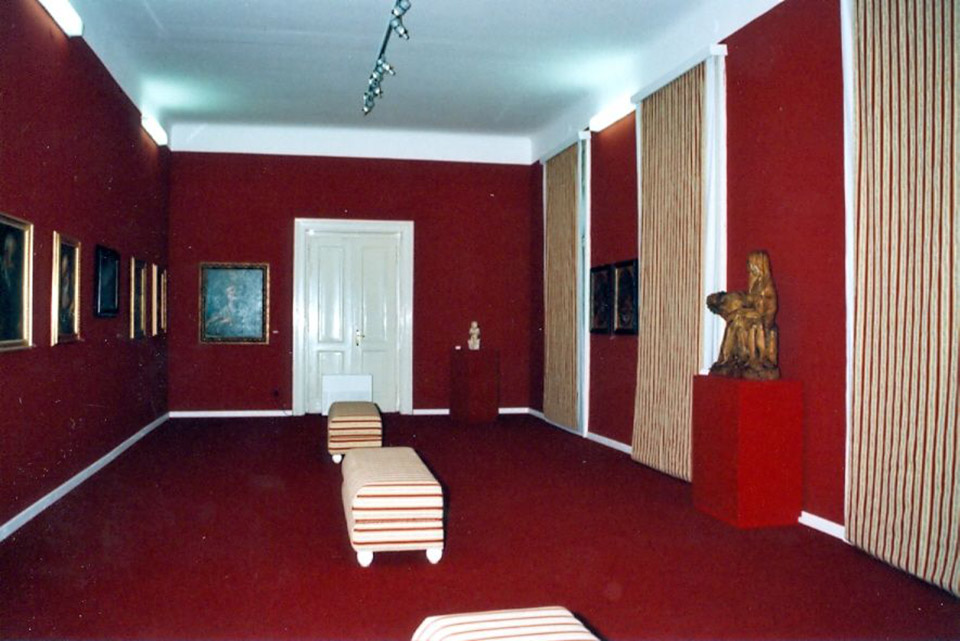
Once the roof was repaired and the conditions were met for exhibitions, the first part of Traces of Time (Department of Archaeology) was opened in 2014 in the eastern part of the second floor, while the second part (Culture and History Department permanent display) was opened in 2015.