

GROUND FLOOR
The space of the ground floor on the western part of the Palace was initially designed by Alajos Hauszmann in 1893 as storage space, boiler room and quarters for the doorman and coach driver. There was also a corridor to allow communication between the Palace’s eastern and western side entrances, which has since been disrupted.
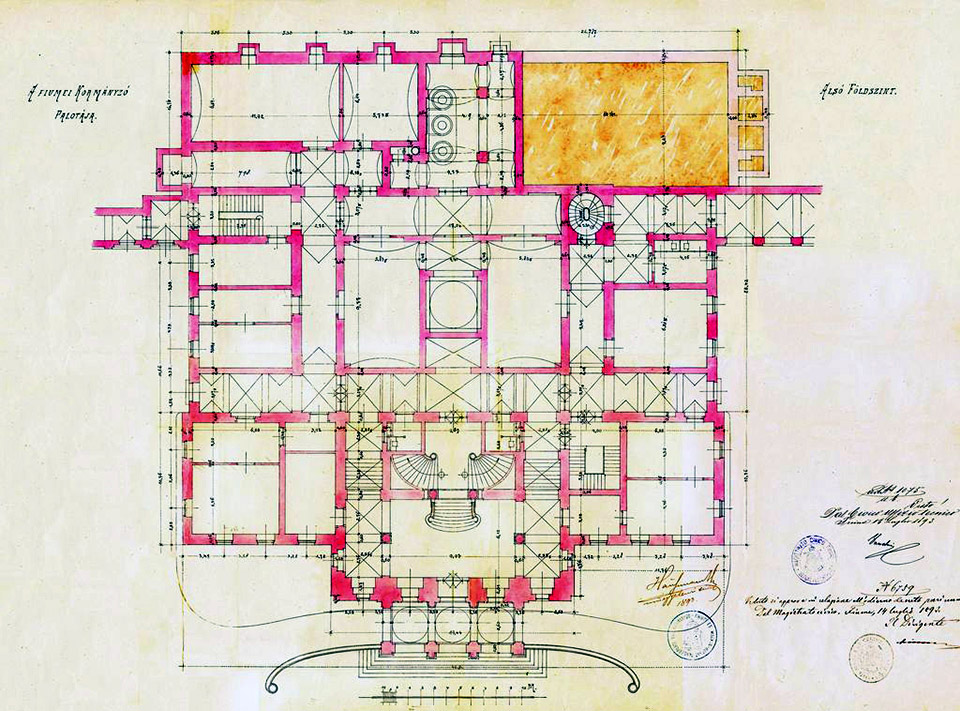
There was another side entrance to the Palace on the western façade, in a gallery arcade, connecting the main building to the outbuilding. Another side entrance was positioned symmetrically on the eastern façade, leading to the galleries of the conservatory (Fr. orangerie) and the garden pavilion.
Since the Palace was built on a steep slope, the northern part of the ground floor had to be dug in and the rooms in that part of the building were overarched by barrel, cross and lunette vaults.

During the 1938 renovation under Italian rule, laundry washing, drying and ironing rooms were arranged together with a wine cellar.
Immediately after World War II, these rooms were used to store food that remained after the Italian governor left the Palace.
In 1955, when the Maritime and History Museum of the Croatian Littoral assumed management of the Palace, all unused spaces were leased. The largest part of the Palace’s ground floor and the western side entrance were leased (1965–1976) to the Šipad furniture company from Sarajevo as their showroom and sales floor. Later, a part of the ground floor was used by the Notification Centre (renamed 112 in 2005) which used the side entrance in the arcades. The remaining space of the ground floor was redecorated to become an exhibition space where the permanent Ethnographic Display opened in 1988, with a partition wall separating it from the space used by the Notification Centre.

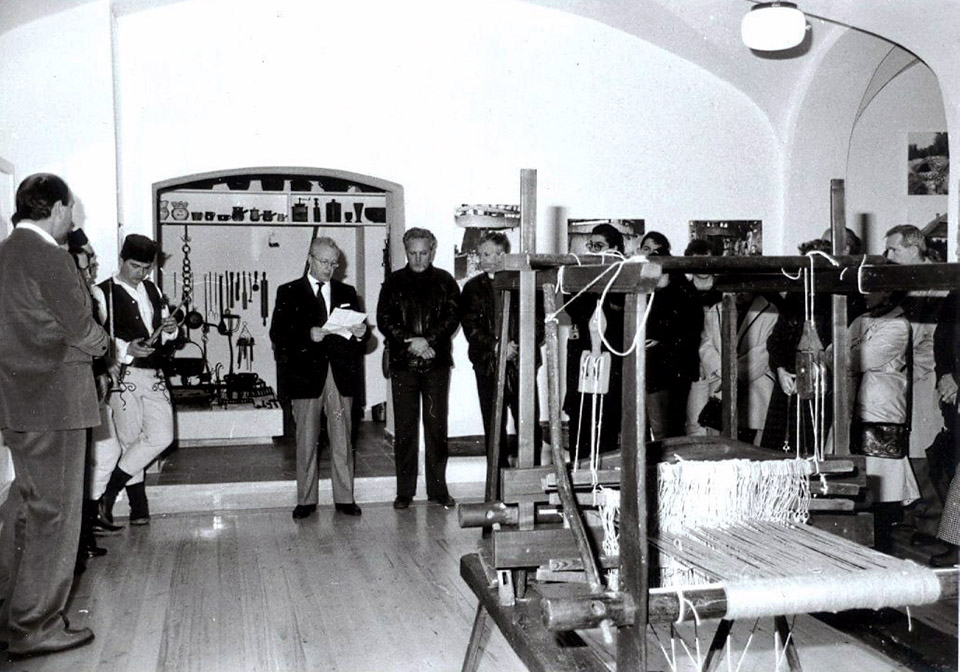
Twenty years later, the permanent Ethnographic Department display materials were moved to the Museum’s storage depot, and the space has since been used for visiting and temporary exhibitions. The Notification Centre moved out in 2010, when the reconstruction and remodelling of part of the ground floor began, whereby it was turned into an exhibition space and preparatory workshop. Communication with other ground floor rooms was re-established.
In 2015, the Homeland War Collection’s permanent display called In Defence of the opened in the western rooms of the ground floor.